

Overview
English Language & Literature
Department Members
| Head Of Department (HOD EL & Lit) | Mr Vincent Wong |
| Subject Head (English Literature) | Ms Danna Thein |
| Teachers | Ms Caritas Lee |
| Ms Charlene Lim | |
| Mr Dennis Wong | |
| Ms Kanchana | |
| Ms Mok Wei Tong | |
| Mdm Lim Pei Yee | |
| Ms Mok Wei Tong | |
| Ms Siti Nur Sufiana Hashim | |
| Mr Shawn Seah | |
| Ms Timmie Tan |
2025 English Language and Literature Programme Highlights
READING PROGRAMME
Our reading programme aims to develop good reading habits and instill a lifelong passion for reading in our students.
‘Read and SHINE’ daily

Through our reading programme, we cultivate a love of reading in our students, by balancing carefully between assigned reading materials and giving students a choice on what to read. Students are given exposure to books and articles of various genres and view related videos to broaden & deepen their perspectives. We have piloted the use of Personal Learning Devices (PLDs) for morning reading and will introduce bite-sized reading and interest-driven approaches to engage and enrich students through meaningful reading experiences.
INTER-DEPARTMENTAL COLLABORATIONS
With targeted inter-departmental collaborations, we aim to extend students’ learning of English Language and Literature beyond the confines of the classroom, providing students with authentic and varied language experiences.
I. Script-to-Stage Learning Experience (2025)
🎭A two-part English Literature enrichment project. Selected Secondary 1 and 2 students were inspired at the ‘Wicked’ musical at Marina Bay Sands on the 19 April 2025. Subsequently, they extended their learning through authentic exploration of the Aesthetics and Language Arts, applying insights from the performance to deepen their appreciation of English and Literature. This was a synergistic collaboration between the English Language and Literature department and the Craft and Technology’s Aesthetic programme.
This fresh approach to our Aesthetics Assembly Programme demonstrated how literature can move beyond the page to become a lived, shared experience for our SSS community!


II. Sec 1 Science-Humanities-English Inter-Disciplinary Project Work
One of the cornerstones of our dynamic learning culture is collaboration. We firmly believe that learning is most powerful when connections are made across disciplines, mirroring the interconnectedness of the real world. A prime example of this synergy is our Secondary 1 Inter-departmental Project Work. Here, our English Language, Science, and Humanities Departments come together, guiding students through real-world learning that involves experimentation, research, and oral presentation. Students learn to integrate knowledge and skills from different domains, break down traditional subject silos, and develop holistic problem-solving abilities. Students were guided in oral communication skills – e.g. preparing a script, practising accurate pronunciation, and addressing their audience – for their Project Work presentation, which formed a meaningful part of their school-based assessment.

TALENT DEVELOPMENT & ENRICHMENT PROGRAMMES
I. Script-to-Stage Performance (2025)
🎭✨ Serangoon Secondary School’s inaugural Script-to-Stage programme brought students’ passion to life through the joint efforts of both the English Language & Literature and Craft & Technology departments.
Selected Secondary 1 and 2 students were empowered to perform ‘LIVE! At the Wet Market’ and ‘Thank You, Ma’am’ for the school, showcasing how literature can leap off the page and onto the stage. From the confident actors and emcees delivering their lines to our creative backstage crew crafting stage-worthy props, every student was a shining Serangoon STAR. Inspired by their ‘Wicked’ theatre experience, these young performers turned their learning into an unforgettable showcase of creativity and teamwork! 📚🌟

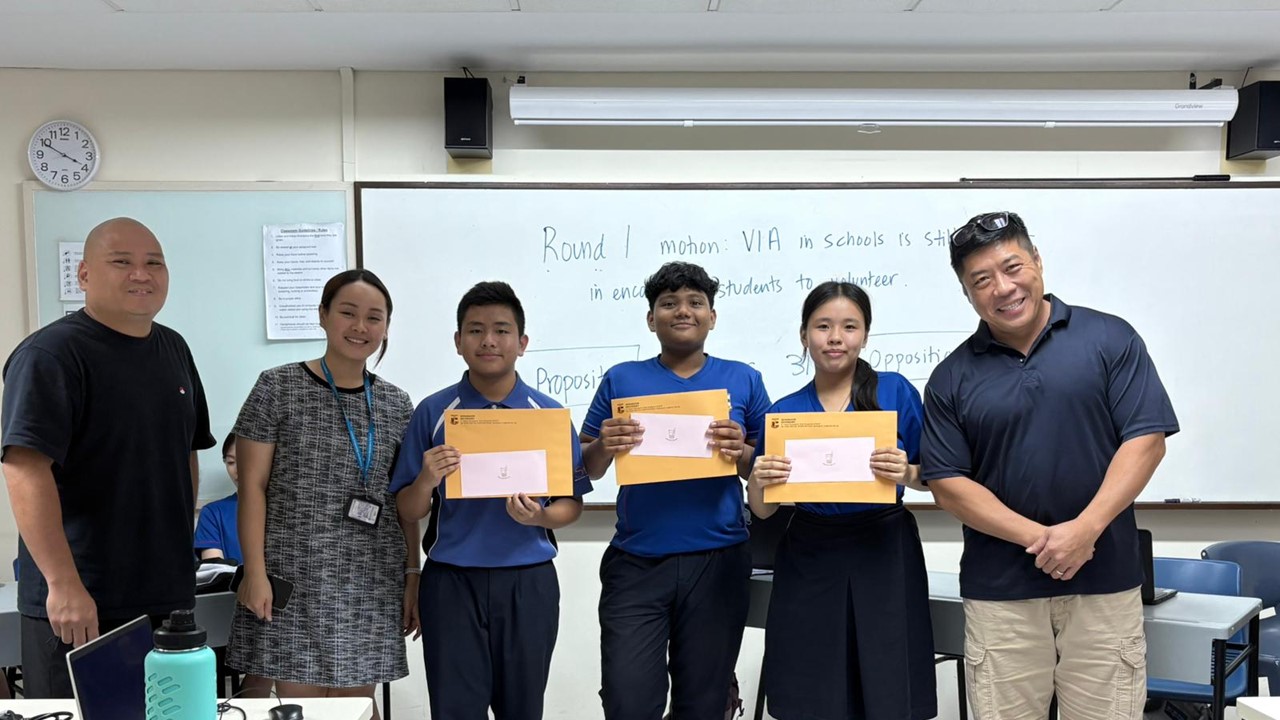
II. Inter-class Debating Competition (Sec 3)
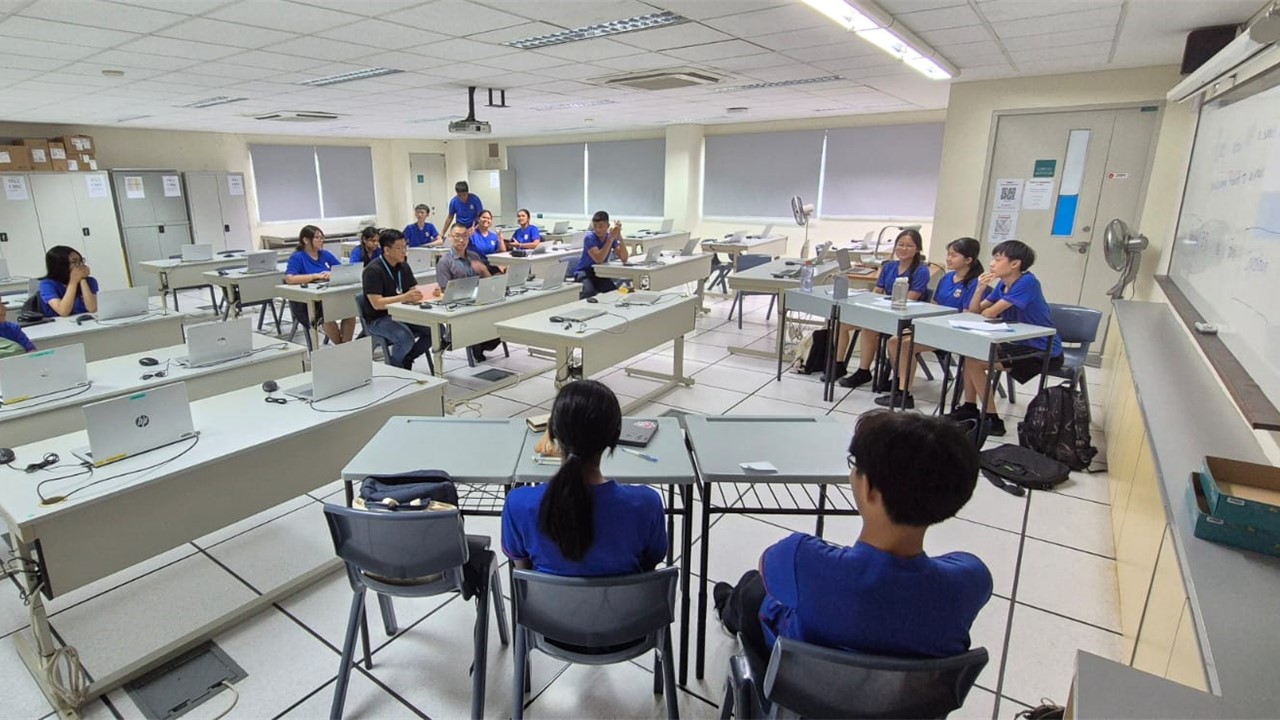
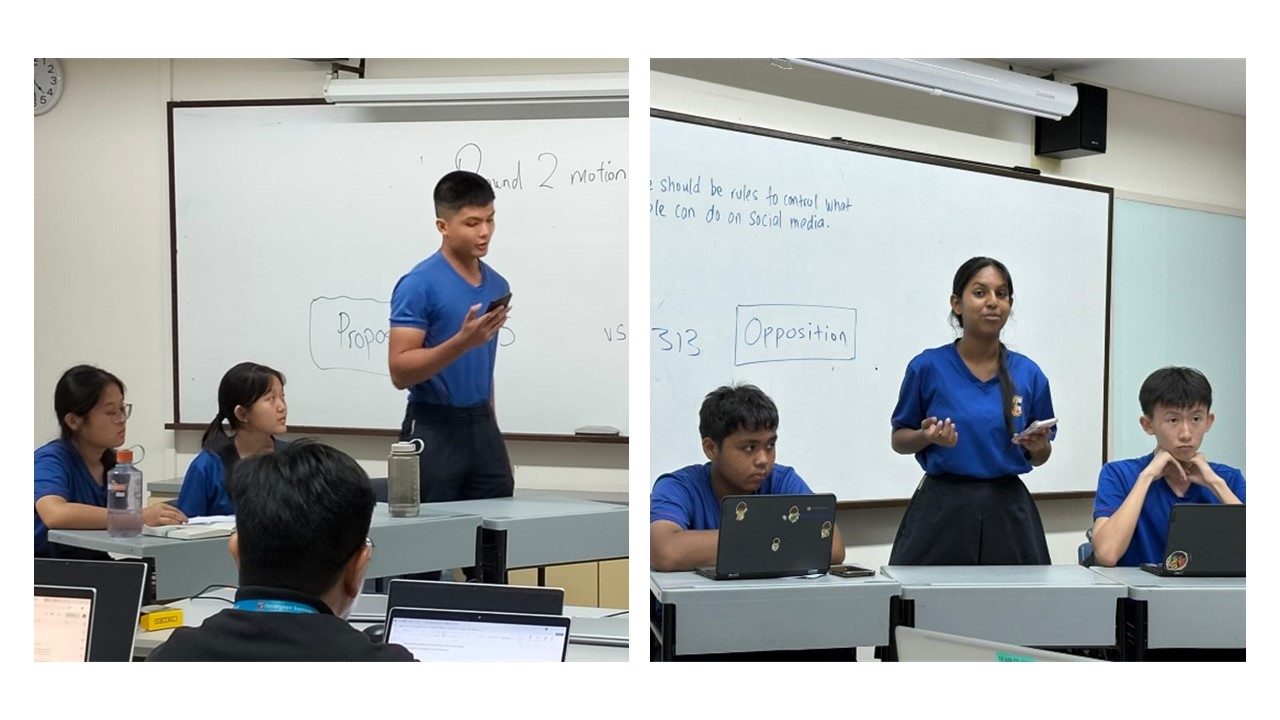
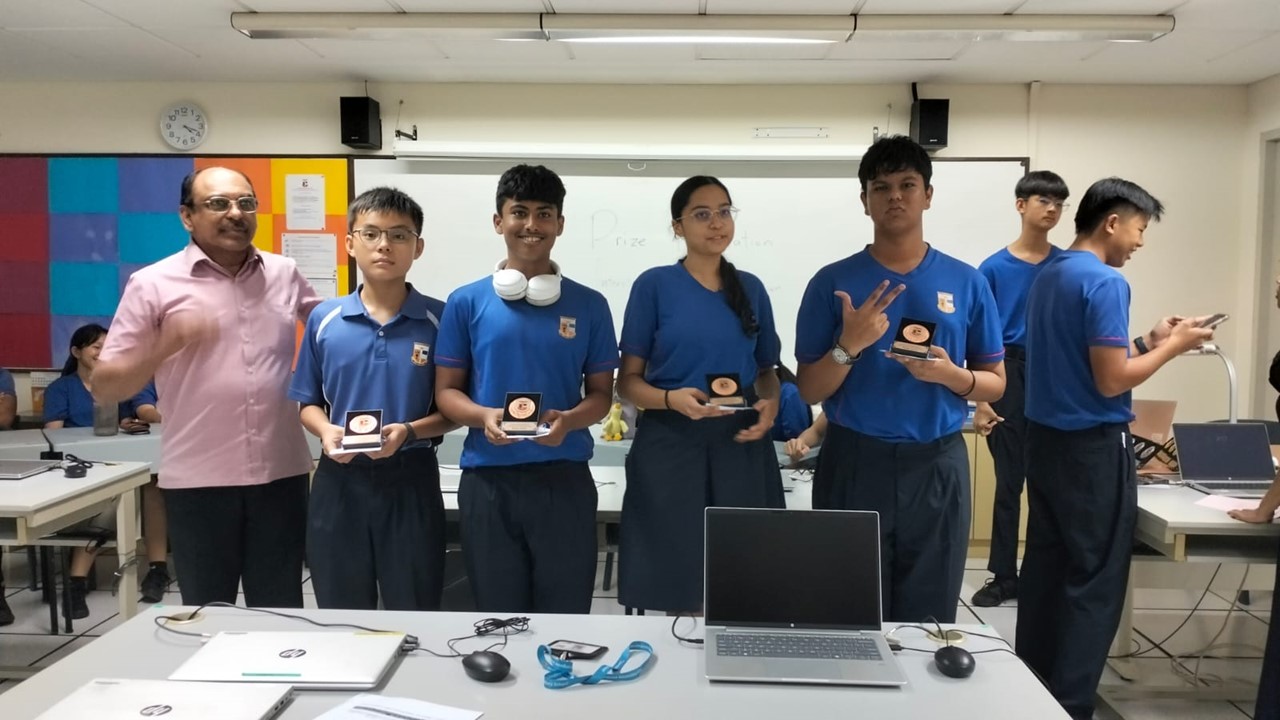
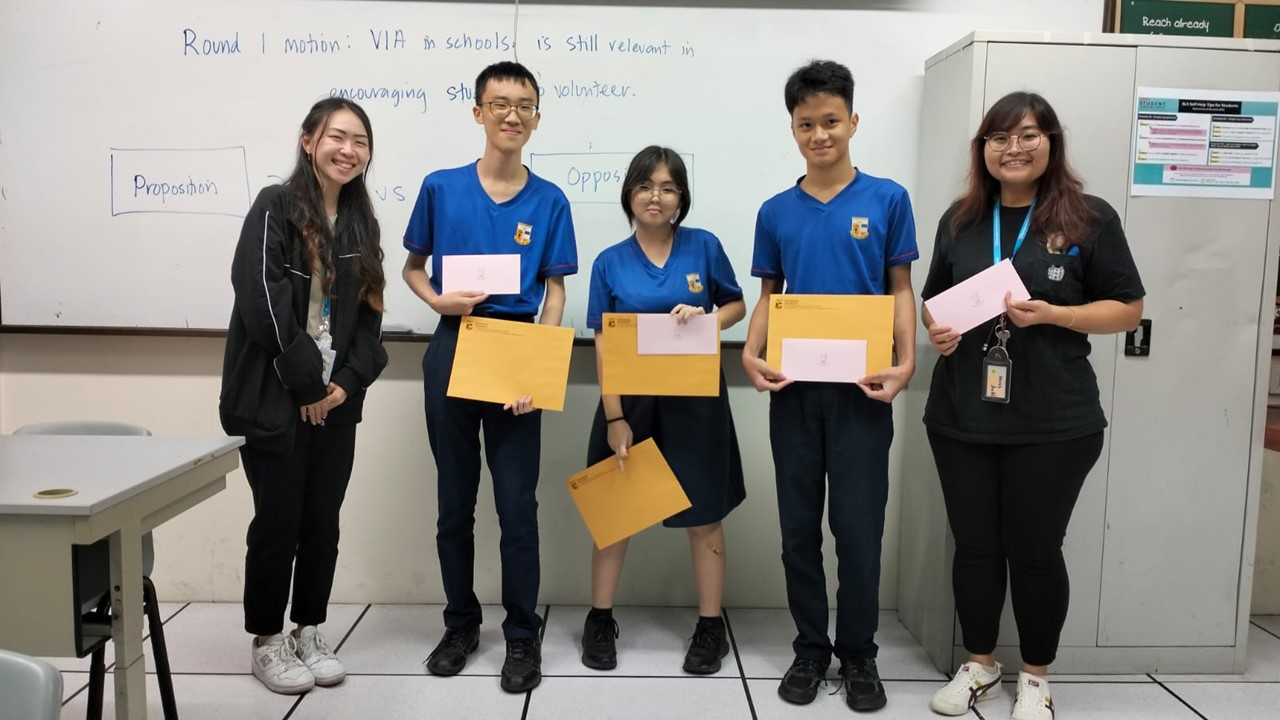
The English Language and Humanities Departments came together to organise an engaging two-part Inter-class English Debate, featuring motions inspired by Social Studies issues!
Students demonstrated strong critical thinking and confident delivery throughout the rounds, supported by teachers who continually encouraged and believed in their abilities.
Before the competition, participants received enrichment and training from experienced debate coaches. Beyond sharpening their speaking skills, the debaters grew in confidence and consistently supported one another, creating a positive and collaborative learning experience!
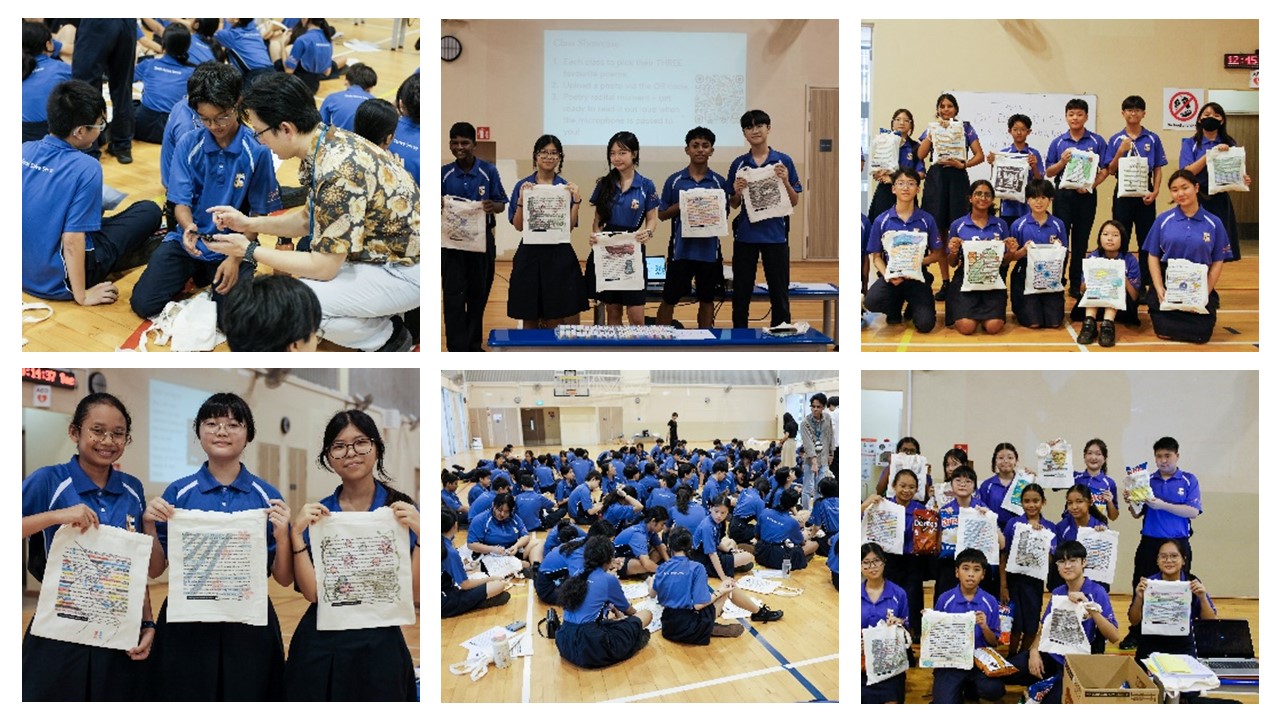
III. Blackout Poetry for Sec 1 (StaRs Programme 3)
The English and Literature Department organised a blackout poetry activity at the Indoor Sports Hall for all Secondary 1 students. Inspired by the Secondary 2 Literature text they will study next year, the session introduced students to the world of words, meaning, characterisation, and plot through a creative and engaging hands-on experience for our talented students as they designed their unique tote bags!
As part of the programme, we also welcomed 40 Primary 6 students from Fernvale Primary School, who joined us during their secondary school tour to experience the vibrant learning environment in our department.
EL Learning Outcomes (Syllabus 2020) for Secondary School Students
| Area of Language Learning | Learning Outcomes |
| Listening & Viewing | 1. Develop auditory discrimination skills and positive listening and viewing attitudes and behaviour 2. Develop listening and viewing skills for understanding by focusing on literal and inferential meaning 3. Develop critical listening and viewing by focusing on implied meaning, higher-order thinking and evaluation 4. Listen to, view and respond to a variety texts |
| Reading & Viewing | 1. Develop reading and viewing readiness, word recognition skills, accuracy, fluency and positive reading and viewing attitudes and behaviour 2. Process and comprehend age-/year level appropriate texts by focusing on literal and inferential meaning 3. Analyse, evaluate and appreciate age-/year level appropriate texts by focusing on implied meaning, higher-order thinking and judgement 4. Respond to a wide and extensive range of texts for enjoyment and understanding how grammatical/lexical items and semiotic modes are used in diverse contexts |
| Speaking & Representing | 1. Develop knowledge and awareness of the features of speaking and representing 2. Develop accuracy and fluency in speaking and representing 3. Explore, generate, develop and organise ideas respectfully as individuals and collaboratively in planned and/or spontaneous situations for a variety of purposes, audiences, contexts and cultures 4. Speak and represent confidently, coherently and cohesively for a variety of purposes, audiences, contexts and cultures 5. Monitor, review, revise and refine responsibly before, during and after speaking and representing |
| Writing & Representing | 1. Develop writing readiness and handwriting to write accurately and fluently 2. Use accurate and consistent spelling 3. Generate, select and organise ideas for writing and representing creatively and critically for a variety of purposes, audiences, contexts and cultures 4. Develop, organise and express ideas coherently, cohesively, creatively and critically in writing and representing to produce texts for a variety of purposes, audiences, contexts and cultures 5. Review, revise, edit and proofread to improve writing and representing |
| Grammar | 1. Use metalanguage for learning and talking about language structures and language in use 2. Apply knowledge of grammatical rules at word and phrase levels 3. Apply knowledge of grammatical rules at sentence level 4. Show understanding of how the purposeful use of language shapes meaning in texts |
| Vocabulary | 1. Develop word consciousness and use metalanguage in building vocabulary knowledge 2. Build rich vocabulary knowledge that supports the development of listening, reading, viewing, speaking, writing and representing skills 3. Use words appropriate for purpose, audience, context and culture |